Stargazing Across the Atacama: Modern Astronomy Meets Nomadic Wisdom
An altitude expedition to northern Chile exploring crystalline atmospheres, cosmological sanctuaries, and desert silence.
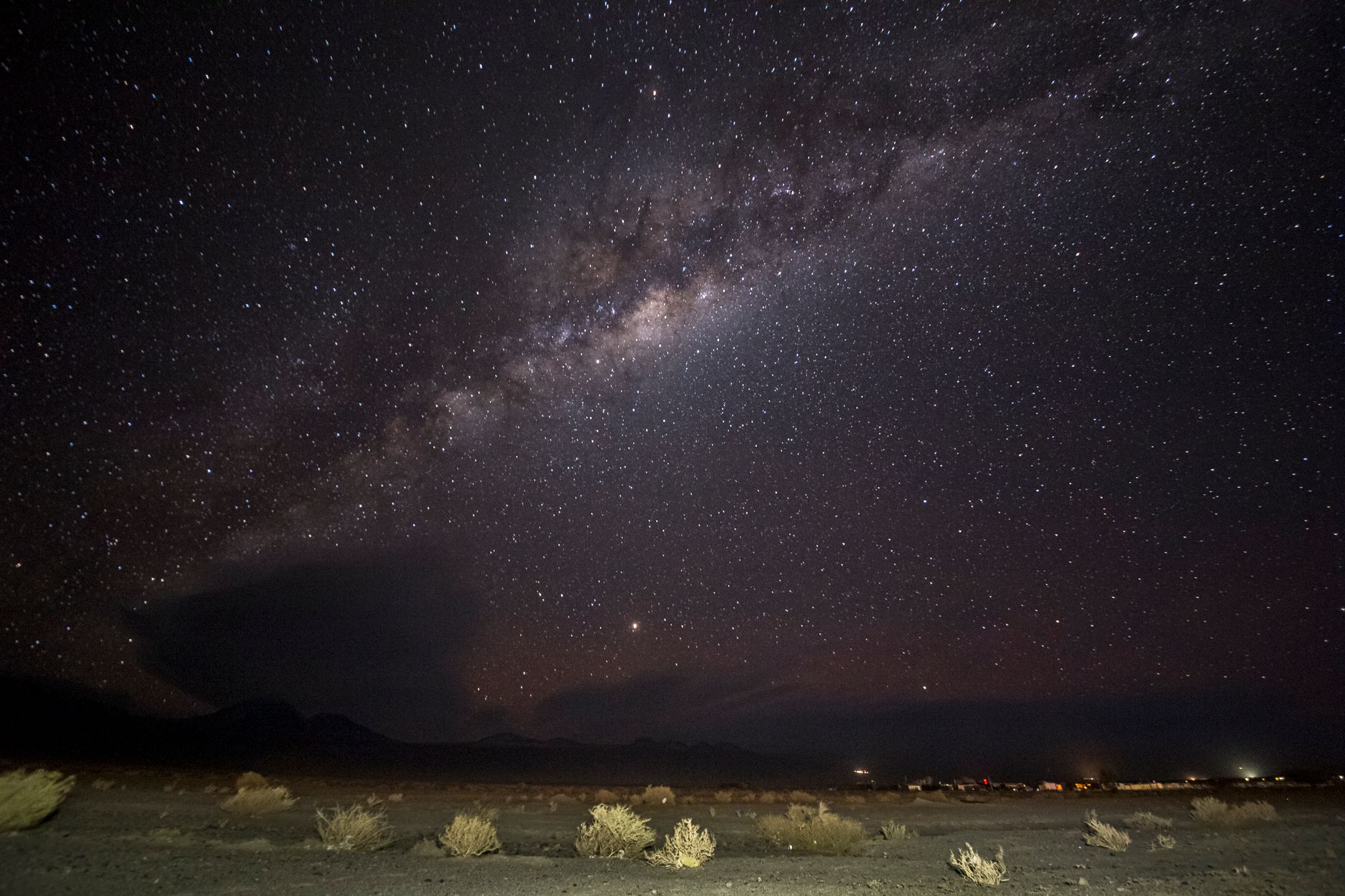
Table of Contents
1. The Clearest Sky on Earth
At 2,400 meters above sea level, moisture disappears. The Atacama Desert is considered the driest non-polar expanse on our planet, sheltered from oceanic storms by the Pacific coastal ridge and shielded from Amazonian moisture by the towering spine of the Andes.
As dusk settles across the lunar valleys, the sky transforms into a velvet canvas pierced by thousands of pinpoint stars. With practically non-existent light pollution, the galactic center of the Milky Way casts discernible shadows across the white salt flats.
2. Indigenous Lickanantay Dark Constellations
While European astronomers mapped stars through connecting bright points, the indigenous Lickanantay people read the dark interstellar dust lanes between the stars. Their celestial cartography identified the Yacana (the cosmic llama) and the Partridge resting within the glowing ribbon of the night sky.
"To gaze upward from this desert is to experience deep geological time alongside infinite cosmological space simultaneously."
Observing through both multi-billion-dollar radio antennas and traditional storytelling creates a rare bridge between cutting-edge astrophysics and ancient pastoral knowledge.
3. Desert Lodges Built of Soil and Salt
Low-impact luxury lodges in San Pedro de Atacama use local adobe and volcanic stone to regulate severe diurnal temperature swings. During the day, thick earth walls absorb intense solar heat; at night, they gently radiate warmth into sleeping quarters without requiring excessive power consumption.
Arrange an Atacama Field Study
Connect with our specialized wilderness guides to organize private observatory sessions and boutique adobe lodge accommodations.
Inquire Regarding Chile Expeditions